BREACH RESPONSE • DIGITAL FORENSICS • THREAT HUNTING
Incident Response.
Cybersecurity incidents are no longer a matter of if, but when. Organizations of every size face threats ranging from phishing attacks and ransomware infections to insider misuse, credential theft, data breaches, and advanced persistent threats. An effective incident response capability helps organizations contain damage, preserve evidence, restore operations, and learn from events to reduce future risk.
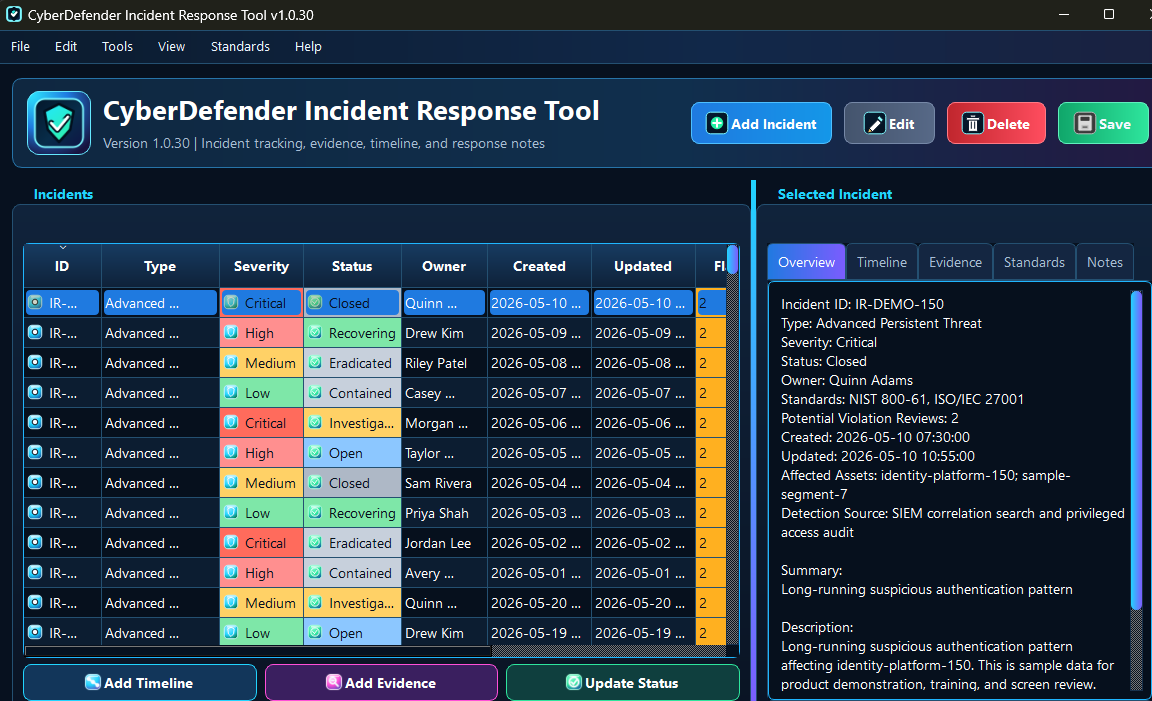
Incident response is a structured process designed to identify, investigate, contain, eradicate, and recover from security incidents. Speed matters, but accuracy is equally important. Decisions made during the first hours of an incident can significantly affect business continuity, legal obligations, regulatory compliance, public trust, and financial impact. A well-developed response process ensures that organizations act methodically rather than react emotionally during a crisis.
Breach response focuses on the immediate actions required when unauthorized access, data exposure, or system compromise is suspected. This includes validating indicators of compromise, identifying affected systems, preserving critical evidence, assessing business impact, and coordinating communication between technical teams, leadership, legal counsel, and other stakeholders. Effective breach response reduces uncertainty while helping organizations maintain control during rapidly evolving situations.
Digital forensics plays a critical role in understanding what happened, how it happened, and what actions should be taken next. Forensic analysis may involve examining system logs, user activity, network traffic, file artifacts, malware samples, authentication records, and other sources of evidence. The objective is to establish a reliable timeline of events, identify root causes, determine the scope of compromise, and support informed decision making. Proper evidence handling is essential to maintain integrity, support investigations, and satisfy legal or regulatory requirements when necessary.
Threat hunting extends incident response beyond known alerts and signatures. Rather than waiting for security tools to generate warnings, threat hunters proactively search for indicators of malicious activity that may have evaded automated detection systems. By combining intelligence, behavioral analysis, anomaly detection, and investigative techniques, threat hunting helps organizations uncover hidden threats before they cause significant damage.
Recovery and remediation focus on restoring secure operations after an incident has been contained. This process often includes removing malicious artifacts, resetting credentials, rebuilding systems, correcting security weaknesses, strengthening monitoring capabilities, and validating that affected assets are safe to return to production. Effective remediation addresses both the immediate problem and the underlying conditions that allowed the incident to occur.
Documentation is another essential component of incident response. Accurate records support investigations, executive reporting, compliance requirements, lessons learned activities, and future response efforts. Maintaining timelines, evidence repositories, status updates, response actions, and supporting notes creates accountability and improves organizational readiness.
An effective incident response program combines preparation, technology, skilled personnel, documented procedures, and continuous improvement. Organizations that invest in these capabilities are better positioned to reduce downtime, limit damage, meet regulatory obligations, and recover from cyber incidents with greater confidence. In today's threat environment, incident response is not simply a technical function; it is a critical business capability that supports operational resilience and long-term security maturity.